
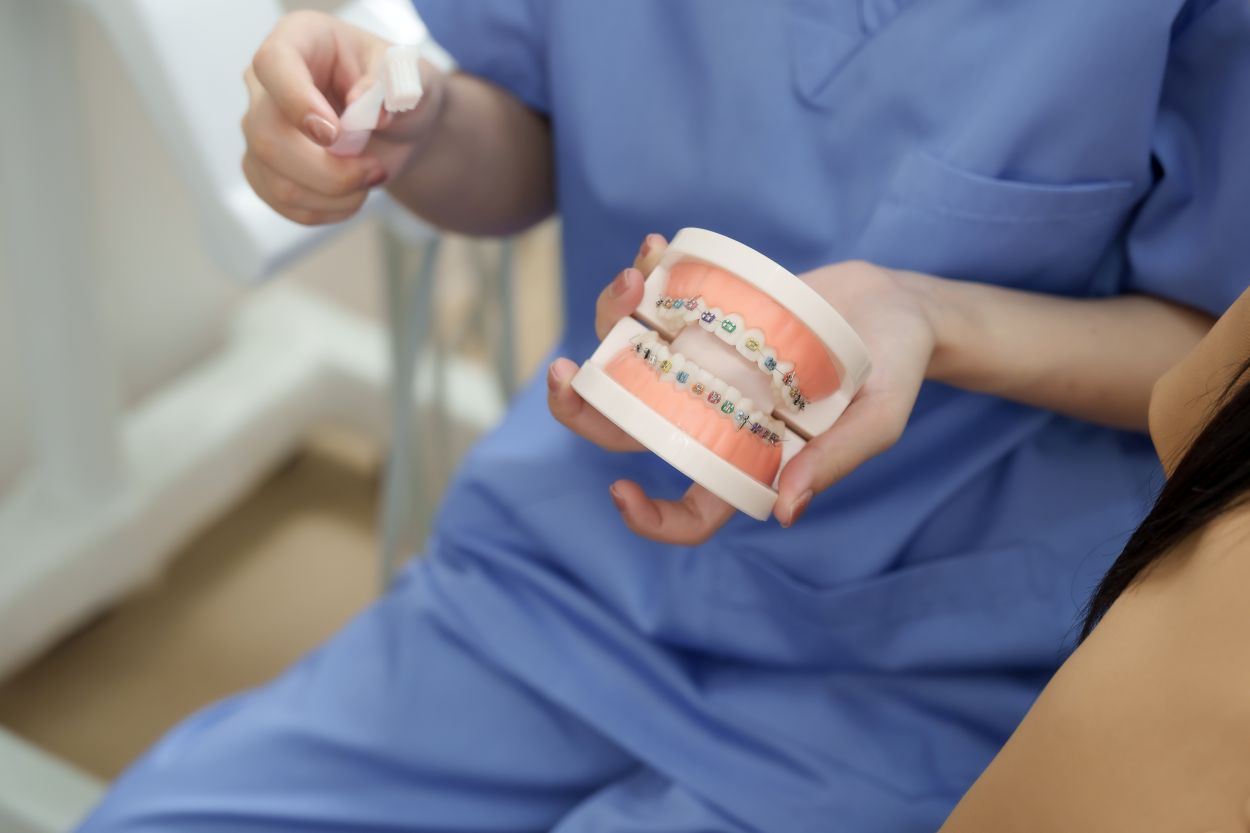
Why can orthodontic treatment cause discomfort?
Whether you’re an adult in orthodontic treatment or a parent whose child wears braces, it’s normal to feel some discomfort after braces are placed or adjusted.
This discomfort is usually mild and temporary, but it can sometimes interfere with day-to-day activities.
Braces work by applying gentle pressure on the teeth to gradually move them into proper alignment. This can cause:
- tooth sensitivity for a few days
- irritation of the cheeks, lips, or tongue caused by friction
- discomfort while chewing, especially after an adjustment
The good news is that there are simple and effective ways to ease these symptoms.
Does the level of discomfort vary by age ?
Children and teenagers
Younger patients usually adapt more quickly to braces. Their gums and bones are more flexible, making tooth movement easier.
However, they may be more sensitive to irritation. Parents should monitor oral hygiene and encourage the use of orthodontic wax.
Adults
Orthodontic treatment for adults can sometimes feel slightly more uncomfortable because tissues are less flexible.
Modern techniques, such as clear aligners, reduce discomfort significantly.
Adults should be especially mindful of their diet and oral hygiene during treatment.
5 tips to relieve orthodontic pain
1. Use orthodontic wax
Orthodontic wax is essential for soothing irritated areas.
Apply a small amount to any part of the bracket that rubs against your cheeks or lips.
It forms a protective barrier and reduces irritation.
Tip: always keep a small box of wax in your bag or bathroom kit.
2. Try natural or over-the-counter pain relief
If discomfort is stronger, you may take a mild pain reliever like ibuprofen or acetaminophen.
For natural relief, try:
- rinsing with warm salt water (1 teaspoon of salt in a glass of water)
- applying a numbing gel available at the pharmacy
3. Choose soft foods
During the first few days after braces are placed or tightened, avoid hard, crunchy, or sticky foods.
You can refer to our full guide on eating with braces.
Also avoid very hot or cold drinks, which can increase sensitivity.
4. Apply cold to reduce inflammation
If your gums feel swollen or sore, apply an ice pack wrapped in a clean cloth for 10 minutes.
Repeat several times a day as needed.
5. Use an antiseptic mouthwash
A gentle mouthwash can help prevent infection and calm irritation.
Choose an alcohol-free product to avoid drying the mouth.
When should you see an orthodontist urgently ?
Most orthodontic discomfort is normal and temporary.
However, certain situations require a prompt visit:
- intense and persistent pain lasting more than 3 to 5 days
- a broken bracket or a wire poking the cheek or gum
- bleeding, signs of infection (redness, significant swelling, fever)
- any allergic reaction to a component of the appliance
If you experience any of these issues, contact your Côte-des-Neiges orthodontist immediately.
Quick intervention can prevent complications and make your treatment more comfortable.
At Orthodontie Côte-des-Neiges, Dr. Tram-Anh Nguyen and her team are available to help with orthodontic emergencies.
Our clinic, located near Côte-des-Neiges metro, provides emergency services for all types of orthodontic appliances.
Experiencing discomfort or need personalized advice?
Contact us today to book an appointment.
Our team will guide you through every step of your orthodontic treatment in Montreal.