
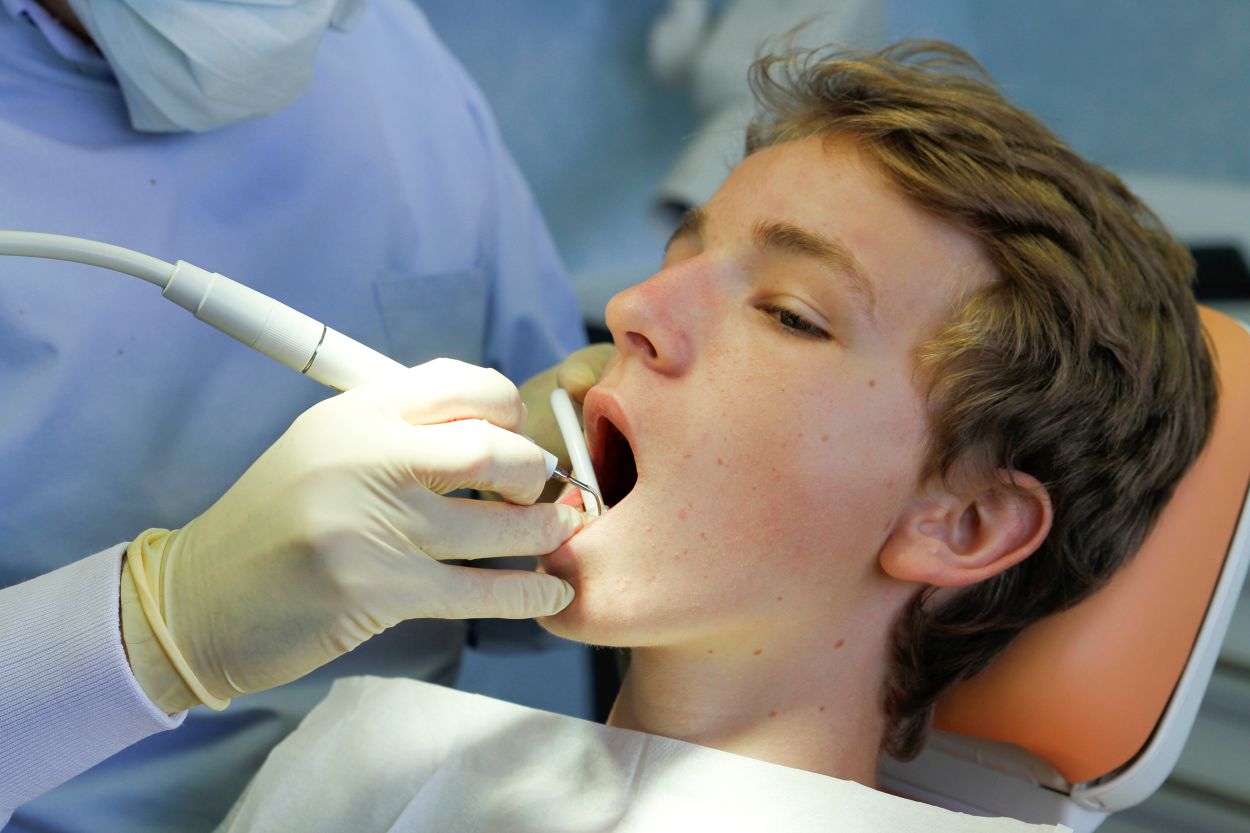
Your dentist mentioned your teeth could be straightened. Or maybe you’ve simply decided to look into it yourself. Either way, a question arises: should you go to your regular dentist or consult a specialist orthodontist? This isn’t just a matter of title — it’s a difference in training, focus, and expertise that can have a direct impact on the quality and duration of your treatment.
The essentials in 30 seconds
- An orthodontist completed 2 to 3 additional years of specialized training after dental school.
- They dedicate their practice exclusively to diagnosing and treating malocclusions.
- No referral is needed — you can consult an orthodontist directly.
- For any complex case, a specialist’s expertise makes a measurable clinical difference
Two very different training paths
To become a general dentist in Quebec, one must complete a Doctor of Dental Medicine (DMD) program — a five-year degree at Université de Montréal or McGill University. This degree covers all dental disciplines: preventive care, restorative dentistry, endodontics, periodontics, oral surgery, and yes, the basics of orthodontics.
An orthodontist, on the other hand, is first a dentist — then goes on to complete a two-to-three-year specialized residency dedicated exclusively to orthodontics. During this residency, they treat hundreds of cases under supervision, master the mechanics of tooth movement, palate expansion techniques, functional appliances, and coordination with orthognathic surgery when needed. Upon completing this pathway, they can obtain the specialist designation recognized by the Ordre des dentistes du Québec (ODQ).
In practice: a skilled general dentist can manage simple orthodontic cases. But as complexity increases — skeletal malocclusions, multidisciplinary cases, growing patients — the depth of a specialist’s training makes a real clinical difference.
| Criteria | Orthodontic Specialist | General Dentist |
|---|---|---|
| Training | 5 yrs dentistry + 2–3 yr ortho residency | 5-year dental degree |
| Recognition | CDAO member / provincial specialist board | General practice licence |
| Scope | Exclusively orthodontics | Multiple dental disciplines |
| Technology | 3D scanner, specialized software | Varies by clinic |
| Follow-up | Dedicated orthodontic protocols | Shared with other care |
| Case complexity | All types, incl. surgical cases | Primarily simple cases |
What this means concretely for your treatment
The initial diagnosis
A specialist orthodontist has access to more comprehensive diagnostic tools: intraoral 3D scanners, cephalometric analysis (studying the relationships between teeth, jaws, and skull), and simulation software like ClinCheck for Invisalign. This thorough diagnosis allows them to anticipate how the treatment will unfold and adapt their mechanics accordingly.
Treatment planning
Orthodontic treatment planning is as much an art as it is a science. A specialist who does exclusively orthodontics all day develops clinical judgment that a general practitioner devoting a fraction of their practice to orthodontics simply cannot acquire at the same depth. For cases involving multiple steps — extractions, coordination with a periodontist, or surgery — this expertise is decisive.
Follow-up and adjustments
An orthodontic treatment is never set in stone. Teeth sometimes respond unpredictably, and mechanical adjustments are regularly needed. A specialist orthodontist recognizes these signals and adapts the treatment plan in real time, preventing unnecessary extensions or suboptimal outcomes.
In Montreal: how to identify a true specialist
In Quebec, the title of ‘orthodontist’ is protected by the Ordre des dentistes du Québec. A practitioner can only advertise as an orthodontic specialist if they have completed a recognized residency and are listed on the ODQ’s specialist register. You can verify a practitioner’s status directly on the ODQ website.
Be cautious of terms like ‘orthodontic services’ or ‘Invisalign treatment’ displayed in a general dental clinic without any mention of a specialist. This may indicate that a general dentist — even a well-trained one — is offering these services alongside their general practice. That’s not necessarily problematic for a simple case, but for a complex one, the difference matters.
At Orthodontie CDN, all treatments are planned and supervised by certified specialist orthodontists, registered on the ODQ’s specialist list. Your treatment is in the hands of clinicians who do exclusively orthodontics — from the first appointment to the final retainer.
Frequently asked questions
What is the difference between an orthodontist and a dentist?
An orthodontist is a dentist who completed an additional 2 to 3 years of specialized residency training exclusively in orthodontics after their dental degree. They focus solely on diagnosing and treating malocclusions — misaligned teeth and incorrect bites.
Do I need a dentist referral to see an orthodontist?
No referral is needed. You can book directly with a specialist orthodontist without going through your regular dentist. Many patients make their first contact directly with the orthodontist, who can then collaborate with the treating dentist if needed.
Can a general dentist place braces or Invisalign?
Technically yes, if the dentist has completed recognized additional training. However, for moderate to complex cases, or to benefit from maximum expertise, a certified specialist orthodontist is the clinical recommendation. For very simple cases, a well-trained general dentist can deliver satisfactory results.
Your treatment deserves dedicated expertise
Choosing a specialist orthodontist means choosing a clinician whose entire practice is orthodontics — every day, for every patient. At Orthodontie CDN in Montreal, that expertise is the foundation of every treatment we offer. Book your consultation at orthodontiecdn.com.